India needs to hike domestic fertiliser output to offset unstable market: Economist
July 18, 2025e-Paper
The View From India Looking at World Affairs from the Indian perspective.
First Day First Show News and reviews from the world of cinema and streaming.
Today's Cache Your download of the top 5 technology stories of the day.
Science For All The weekly newsletter from science writers takes the jargon out of science and puts the fun in!
Data Point Decoding the headlines with facts, figures, and numbers
Health Matters Ramya Kannan writes to you on getting to good health, and staying there
The Hindu On Books Books of the week, reviews, excerpts, new titles and features.
July 18, 2025e-Paper
India needs to hike domestic fertiliser output to offset unstable market: Economist
Dr. Sitko warns that the West Asia and Ukraine situation will continue to impact fertiliser and oil prices. He urged reducing dependence on imported fertilisers and boosting domestic production
Published - October 21, 2024 08:07 am IST - NEW DELHI
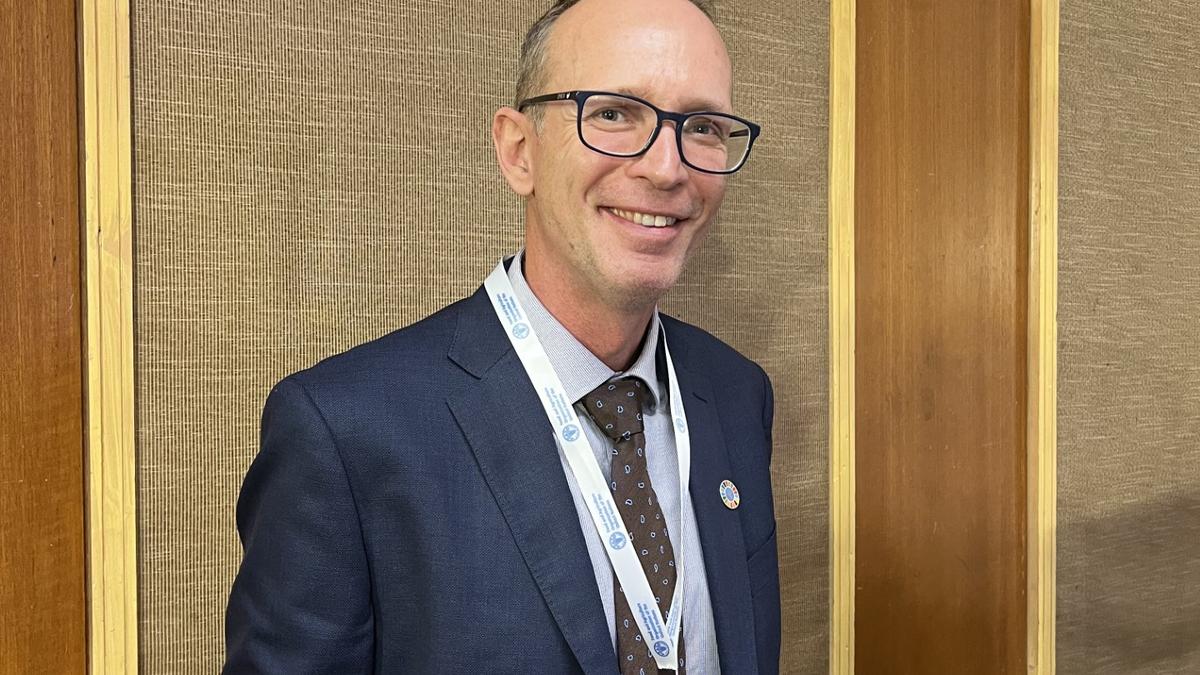
Dr. Nicholas Sitko | Photo Credit: Special Arrangement
Senior Economist of the Food and Agriculture Organization (FAO) of the United Nations, Nicholas Sitko, said India has to increase its own fertiliser production capacity as the situation in Ukraine and West Asia is likely to remain unstable. Dr. Sitko, who was in New Delhi in connection with a discussion on FAO’s report ‘The Unjust Climate: Measuring the Impacts of Climate Change on Rural Poor, Women, and Youth’, said India has to think of changing its farming systems to become less dependent on imported fertilisers and should focus on building up organic carbon in soil by switching to natural farming practices.
Talking to The Hindu, Dr. Sitko said there are many parts of the world where agricultural systems are facing tough challenges due to climate change. Adaptations to those changes are becoming difficult for the systems. “But we are still in what we call soft limits to adaptations where there are technological solutions that could help us to address some of the challenges,” he said, adding that the FAO report on ‘Unjust Climate’ highlights that not everybody is able to equally access the adaptation practices.
“In India, in many agricultural communities, there is a shift in the structure of agriculture. Many men are going outside agriculture to find work, and many women are staying in the communities to carry on the agricultural activities. These women are becoming the backbone of the agricultural economy,” he said and added that women farmers and agriculture workers face issues that are specific to them, and their unpaid family labour increases the agricultural burden on them. “There should be policies in place that make sure that these women farmers can access insurance and credit, participate effectively in training, have equality in the distribution of inputs, and access to the market,” he said.
On the situation in Ukraine and Gaza and its impact on agriculture, he said at present he doesn’t see any stability in the fertiliser markets. “So, what can India do? You can develop your fertiliser production capacity. It is also about how you shift your farming systems to become less dependent on imported fertilisers and how to make better use of the fertilisers we have. This is where there is a potential win-win situation with climate medication as well,” he said, adding that capturing carbon in the soil by retaining residues and having legumes integrated into the system can enhance soil nutrients. “This transition to lower import intensity agriculture based on the building up of organic carbon in soil offers potential to reduce fertiliser use,” he said.
He said the transition to a much more nature-based agriculture, shifting away from petrochemicals and mono crops can come with a yield penalty for the first one or two years. “Marginalised farmers do not have that luxury,” he said and asked the government to provide a social safety net for farmers. “India has robust social safety net programmes. Households undergoing the transition should also have this safety net, and it should be a much more integrated approach by bringing together technology and training,” he said.
The most urgent step in this direction is to ensure that there is an integrated approach. “We are not going to tackle one problem with one technology,” he said and called for a holistic approach. “It involves bringing together a variety of ministries,” he said. “We need to recognise that people are highly vulnerable, agriculture workers are highly vulnerable. We need to take care of their society. India is doing a lot in terms of looking forward on its climate impact and trying to adjust the policies to anticipate what the future will be,” he said.
When asked about a previous FAO report that said about 74% of the Indian population does not have access to a nutritious diet, he said India has a high number of people who are very vulnerable to food insecurity. “Small changes in prices and supplies can have a dramatic effect on availability of food for a large share of the population.” He said there is a strong focus on wheat and rice, but there is a strong component of legumes as well. “India has a historical legacy of thinking of food as medicine. Food is more than just a commodity here. Building on that foundation with a state presence to ensure that when things go wrong there is a safety net in place will be helpful,” he said.
Published - October 21, 2024 08:07 am IST
Related Topics
Top News Today
Terms & conditions | Institutional Subscriber
Comments
Comments have to be in English, and in full sentences. They cannot be abusive or personal. Please abide by our community guidelines for posting your comments.
We have migrated to a new commenting platform. If you are already a registered user of The Hindu and logged in, you may continue to engage with our articles. If you do not have an account please register and login to post comments. Users can access their older comments by logging into their accounts on Vuukle.
Post a Comment