Auction-only route for dust tea sale against govt.’s ease of doing business policy: NETA
April 9, 2025e-Paper
The View From India Looking at World Affairs from the Indian perspective.
Karnataka Today Your daily dose of news highlights from Karnataka
First Day First Show News and reviews from the world of cinema and streaming.
Today's Cache Your download of the top 5 technology stories of the day.
Science For All The weekly newsletter from science writers takes the jargon out of science and puts the fun in!
Data Point Decoding the headlines with facts, figures, and numbers
Health Matters Ramya Kannan writes to you on getting to good health, and staying there
The Hindu On Books Books of the week, reviews, excerpts, new titles and features.
April 9, 2025e-Paper
Auction-only route for dust tea sale against govt.’s ease of doing business policy: NETA
The North East Tea Association voiced their concerns in a letter to Commerce and Industry Minister Piyush Goyal; they also sought reasonable selling time at auction so that teas do not remain unsold
Updated - December 02, 2024 10:31 am IST - GUWAHATI
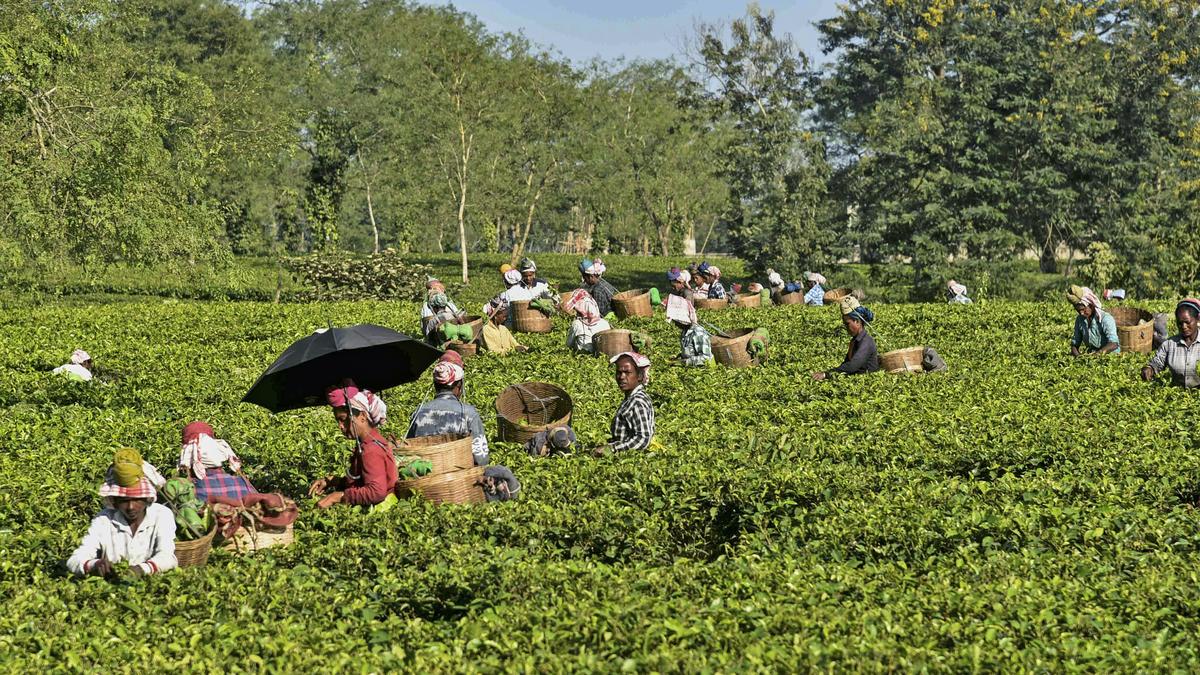
The North East Tea Association said producers should be at liberty to sell their produce in whatever manner they feel comfortable. | Photo Credit: ANI
GUWAHATI
A February 26 gazette notification making it mandatory for producers to sell 100% of their dust teas through public auction was against the government’s much-vaunted policy of ease of doing business, a body of tea planters and producers said in a letter to Commerce and Industry Minister Piyush Goyal.
The North East Tea Association (NETA) said producers should be at liberty to sell their produce in whatever manner they feel comfortable as the two modes of sale — private transactions and public auctions — have been in existence for more than 150 years and both systems have their advantages and disadvantages.
“We feel compelling the producers to sell their produce only through public auctions may not be in sync with the government of India’s policy of ease of doing business,” NETA chairman Ajay Dhandharia said in the letter on Saturday (November 30, 2024).
He referred to the observations of the three-member R. Ramaseshan Committee formed in December 2023 on auction reforms for tea. The draft report submitted by the panel on June 28 said, “Private tea sales provide producers with an alternative method for selling their teas, offering flexibility, customisation, and direct engagement with buyers.”
The panel said that private sales involving direct transactions between producers or their agents and buyers allow for more personalised negotiations tailored to the specific needs and preferences of both parties, although such sales are not subject to the same regulations and oversight as public auctions.
“While they may operate outside of the structured auction system, private sales play a significant role in the broader tea market ecosystem, providing additional avenues for trade and commerce,” the Ramaseshan panel said.
The February gazette notification from the Ministry of Commerce also said at least 50% of other grades of tea – orthodox and the granular CTC (crush, tear, and curl) primarily – should reach the markets through the auction route.
The NETA also sought an efficient auction system with a reasonable selling time and selling cost to prevent situations where large volumes of tea remain unsold.
“Although Tea Board has been trying to bring the printing time from 19 days to 17 days, the printing time in sale number 48 (held on November 26) at the Guwahati Tea Auction Centre reached 28 days. As a result, 40% of the CTC teas remained unsold,”
‘Printing time’ is the period of sale at the auction covering the arrival of teas at a warehouse to the time it is ready for sale in the first attempt. The unsold teas go for reprinting (second attempt) but after several weeks, which can affect the quality of the teas.
The NETA suggested fixing the minimum number of bags for each lot to be auctioned at 20 for manufacturers producing more than 2.5 lakh kg of tea per annum during the peak production months from June-October or July-October.
Noting with concern that tea exports reduced from 60% in the 1960s to 16% in 2023 with the export volume largely stagnant in the past few years, the NETA suggested generic promotion of tea in the domestic market by “breaking the image of tea as a conventional common man’s drink” and making it popular among youth.
Published - December 02, 2024 10:30 am IST
Related Topics
Top News Today
Terms & conditions | Institutional Subscriber
Comments
Comments have to be in English, and in full sentences. They cannot be abusive or personal. Please abide by our community guidelines for posting your comments.
We have migrated to a new commenting platform. If you are already a registered user of The Hindu and logged in, you may continue to engage with our articles. If you do not have an account please register and login to post comments. Users can access their older comments by logging into their accounts on Vuukle.
Post a Comment